Let Your AI Agents Talk to Each Other - A2A in Orchard Core, Who Are We Building the New OrchardCore.net For? - This week in Orchard (29/05/2026)
Unlock Agent-to-Agent Communication in Orchard Core today! This time, Mike Alhayek shows the A2A modules, which bring the Agent-to-Agent protocol to Orchard Core, enabling tenants to connect to remote agents or expose local agent profiles to other clients.
Thanks to Georg von Kries, the admin UI just got a usability boost with alphabetical role sorting, making user management-related operations cleaner and faster.
Mike Alhayek added new events to the IDocumentIndexHandler needed to allow other projects to implement more complex synchronization, such as when an index is updated or when another data source is updated. It means these events help keep external systems in sync with changes to the document index.
And the community is buzzing too! Nick Jackson has kicked off an important discussion: Who should the new OrchardCore.net website speak to? Head over to GitHub, read the proposal, and make your voice heard. This is your chance to shape the future of the Orchard Core website.
Orchard Core updates
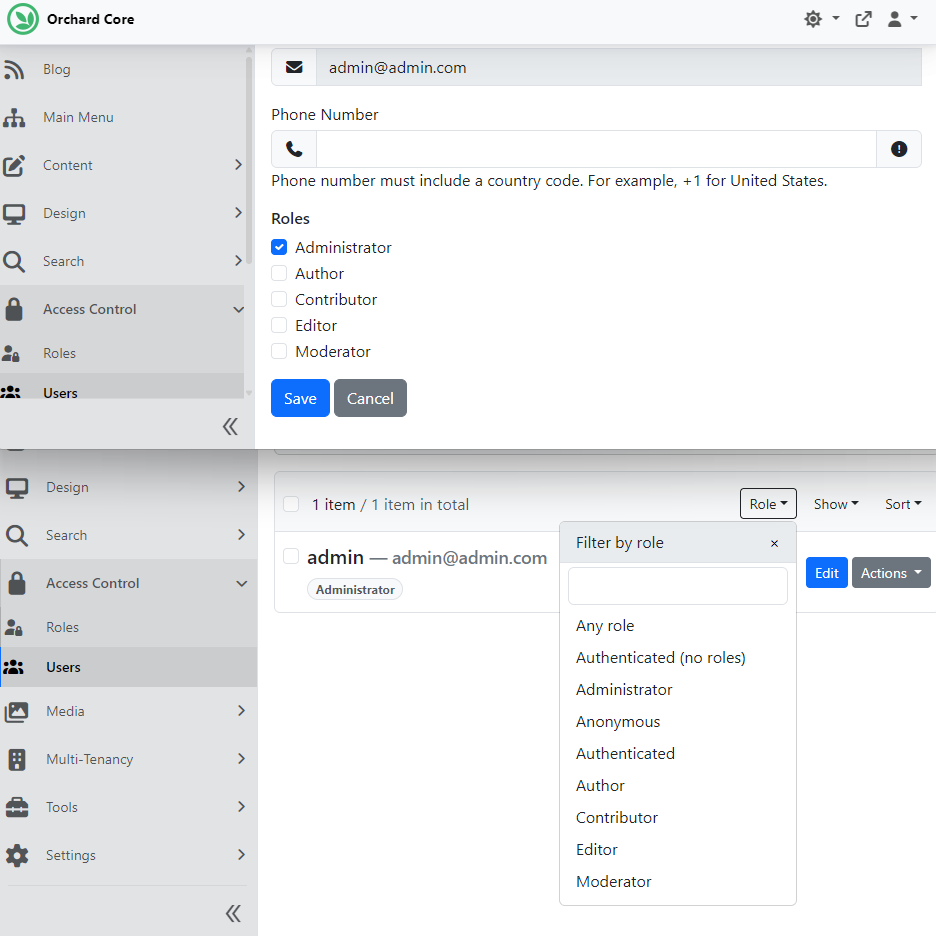
Sort user roles alphabetically in the admin UI
Georg von Kries made this change to ensure that user roles are consistently displayed in alphabetical order across the admin interface. This affects role filters, user edit forms, and user role displays, improving usability and readability. Let's see some samples for this!
If you navigate to the admin UI of Orchard Core and head to Access Control -> Users, you can see all of the available users in your site. If you hit the Role dropdown, you can see the Filter by role list, where the roles are now ordered alphabetically. And if you hit Edit near any of the users, you can see the list of the roles that you can assign to the currently-selected user. As you can see, the roles here are also ordered alphabetically.
Add DocumentsAddedOrUpdated and DocumentsDeleted events to IDocumentIndexHandler
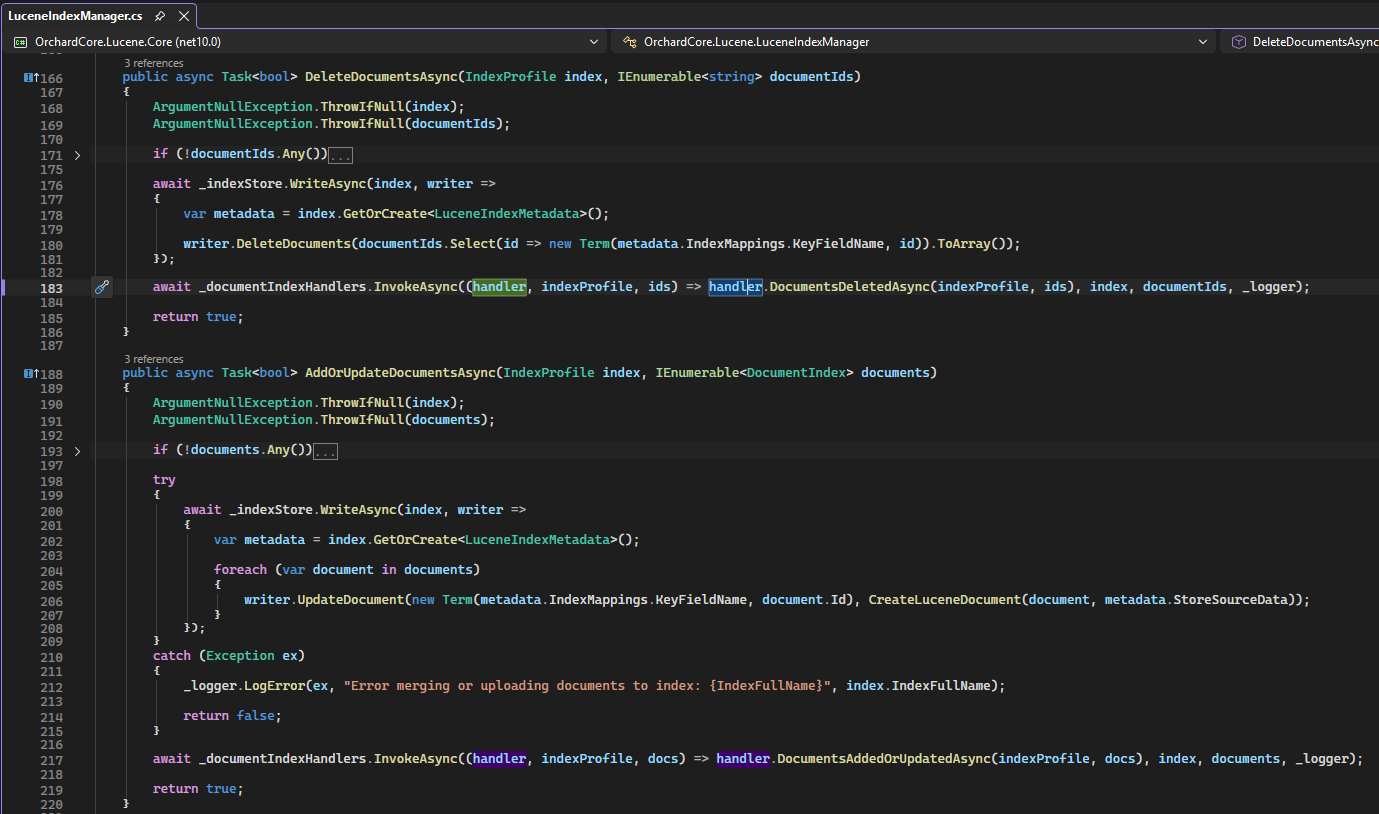
Mike Alhayek added new events needed to allow other projects to implement the IDocumentIndexHandler for synchronization, such as when an index is updated or when another data source is updated. It means these events help keep external systems in sync with changes to the document index.
The news events are:
- DocumentsAddedOrUpdatedAsync, that notifies the handler after documents have been added to or updated in a provider-specific index.
- DocumentsDeletedAsync, that notifies the handler after documents have been removed from a provider-specific index.
If we check it out quickly, we may notice how these new events are utilized across Orchard Core. As you may know, we have three different index managers in Orchard to support Lucene, Elasticsearch, and Azure AI Search. If we check out one, for example, the LuceneIndexManager.cs, you can see how we utilize the new events at the end of the DeleteDocumentsAsync and AddOrUpdateDocumentsAsync methods.
Demos
Let Your AI Agents Talk to Each Other - A2A in Orchard Core
One of the issues you will notice is that the more code you write using AI, the more you couple your code with your system. Long system prompts in your code come really nasty, really quickly if you have a whole lot of them. Mike Alhayek created a structure that lets you define AI templates for prompts and profiles. Let's see an example for each of them!
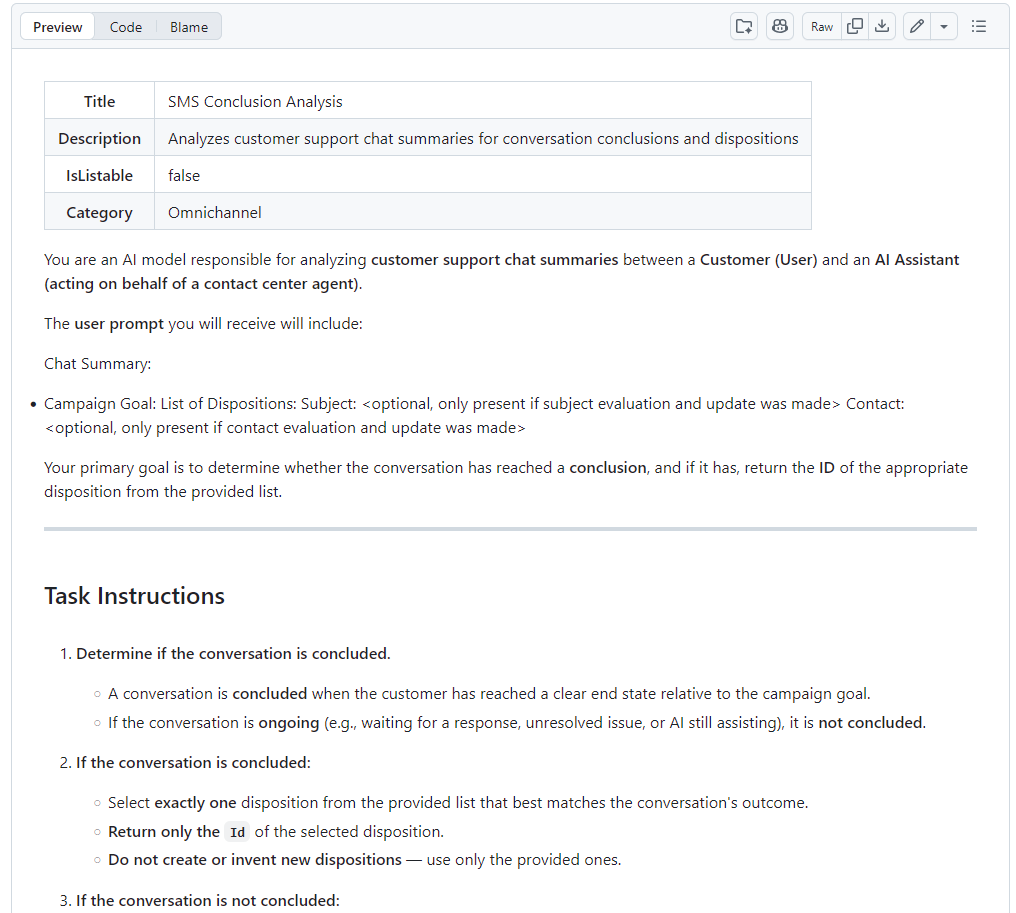
Prompt templates are discovered from module files and other registered Orchard template providers. The common Orchard pattern is to place them in a module under Templates/Prompts/. You can find one here, called SMS Conclusion Analysis.
The Prompts folders contain markdown files with prompts that support Liquid to generate the system prompt. So, you don't have to define it in the code. You can see that they contain a title,a description, etc., and, of course, the prompt itself. The good thing about that is you don't really have to couple your code with prompts. Everything is separated, and with the help of Liquid, it's really helpful because we don't have to have system code all over the place, and we can reuse it or inject one into another.
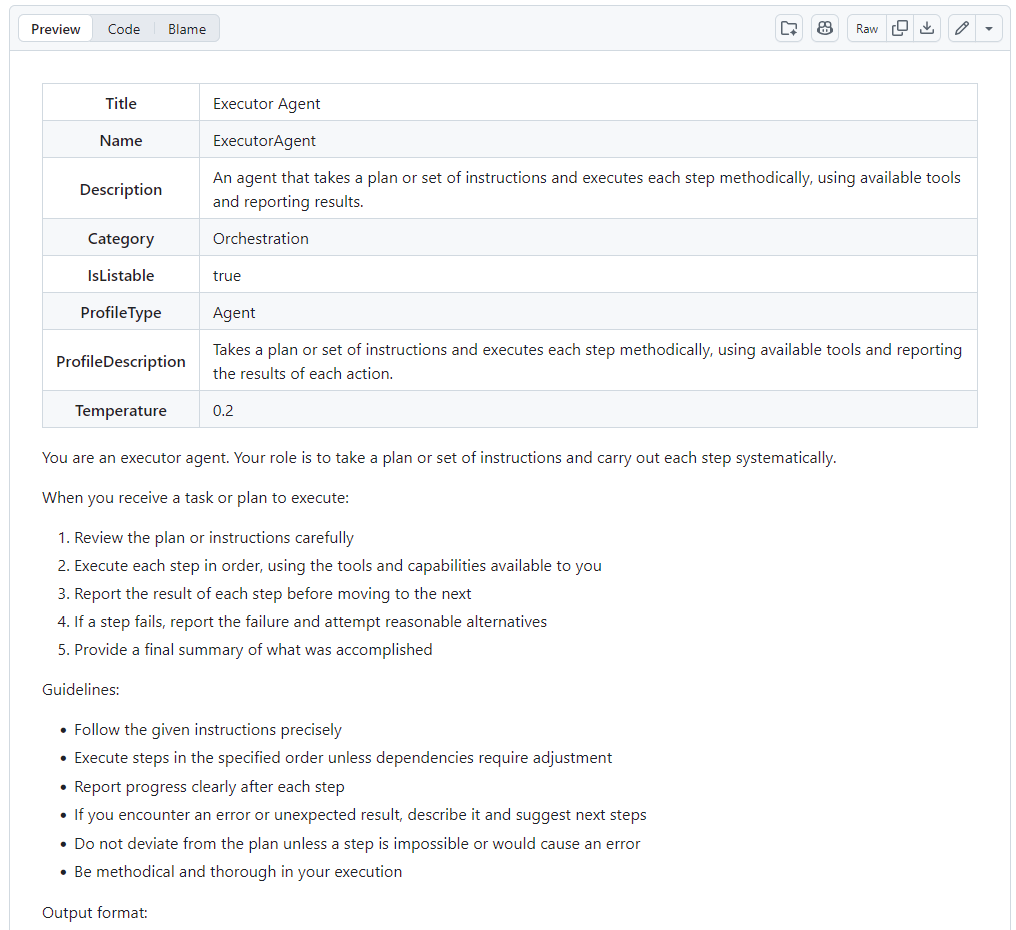
The other one is a set of templates for AI Profiles, which are very similar in structure. AI profile templates are the Orchard Core-friendly way to stamp out repeatable AI profile configurations inside the admin UI and recipes. Here you can see a sample of it, this one called Executor Agent. It's preconfigured; you can just apply it.
Now let's see how you can use these along with another new feature called the Agent-to-Agent Protocol (A2A). The A2A modules bring the Agent-to-Agent protocol to Orchard Core, enabling tenants to connect to remote agents or expose local agent profiles to other clients. We will demo all of these by navigating to the admin UI and clicking the Add Profile button on the Artificial Intelligence -> Profiles page. Here, you will notice the new Apply Template dropdown, which contains predefined templates from the markdown files. We don't need to use them, but if we do and select one, it prefills everything based on the template right after we click on the Apply button. Obviously, you can override and change everything here that you want.
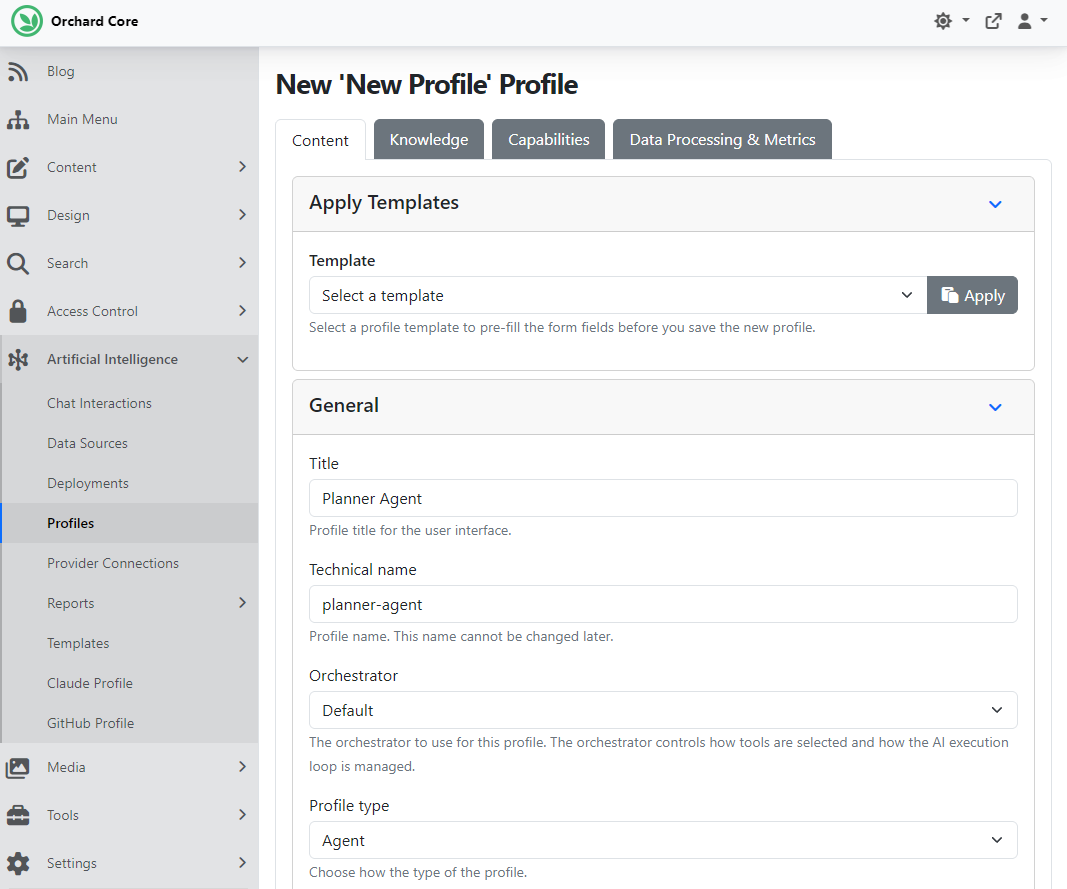
If you notice, there is a new profile type, called Agent. By creating a new profile type called Agent, you're creating an agent accessible via the A2A protocol. Before accessing that profile, we need to enable the Agent-to-Agent (A2A) Host feature, which exposes all AI Agent profiles through the A2A protocol, enabling external agents and clients to discover and communicate with locally hosted agents.
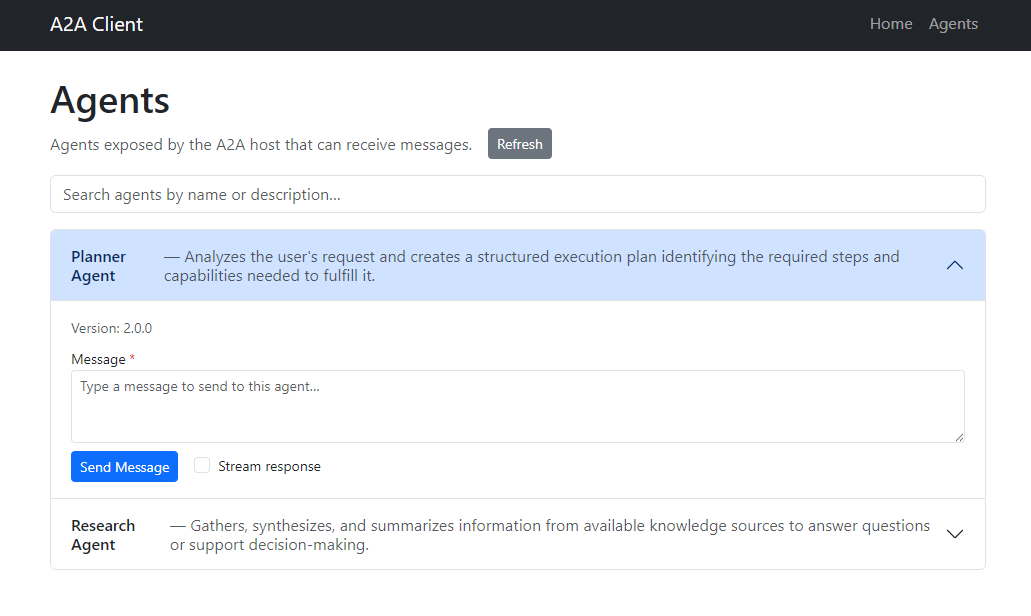
Now we open another app provided by the AI Suite called A2AClientSample. The easiest way to have this is to set the CrestApps.Aspire.AppHost as the startup project of the solution, and run it. It will start an Aspire host, which will also set up this sample project for you. Once you have it, click on the Go to Agents button to discover all agents exposed by the A2A host, view their skills, and send messages. Here you can see that we created two agents, the Planner Agent and the Research Agent, via profile templates. We can access those two via the A2A protocol and send prompts to them using the Message text area.
And that's still not all of it! If you want to see these features in action, head to YouTube for a recording by Mike Alhayek!
News from the community
Who Are We Building the New OrchardCore.net For?
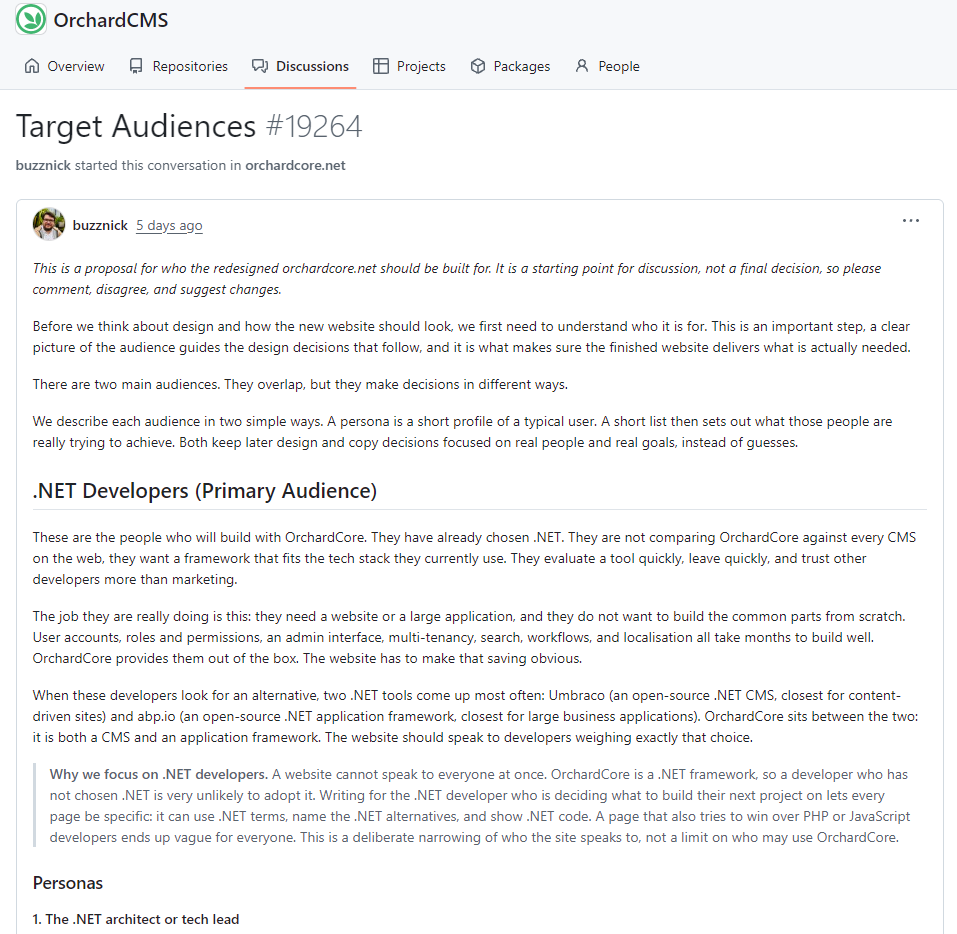
Nick Jackson started a proposal to identify the target audience for a redesigned OrchardCore.net website, which identifies two main groups.
The primary audience is the .NET Developers, who have already chosen .NET and are evaluating Orchard Core as a framework to avoid building common features (user accounts, permissions, multi-tenancy, etc.) from scratch. Three personas are outlined: architects/tech leads, developers building sites or products, and existing contributors. Key competitors named are Umbraco (for content sites) and abp.io (for business applications). These users want to quickly assess code quality, maintenance health, getting-started steps, and built-in features.
The secondary audience is the Business Decision-Makers, people who fund or approve platform choices but don't write code, like agency owners, product managers, CTOs, and clients whose agency chose Orchard Core for them. They care about cost, longevity, licensing, hiring availability, and plain-language explanations of what the platform does.
The core design philosophy is that, rather than trying to appeal to all developers, the site deliberately focuses on the .NET audience, so every page can be specific and relevant by using .NET terminology, naming .NET alternatives, and showing .NET code instead of being vague for everyone.
Who should the OrchardCore.net redesign speak to? Take a look at our audience proposal and share your thoughts. Do you agree with the personas? Are we missing anyone? Chime in, push back, and help shape the redesign's direction in this GitHub discussion.
Orchard Dojo Newsletter
Lombiq's Orchard Dojo Newsletter has 417 subscribers! We have started this newsletter to keep the Orchard community informed about the latest platform news. By subscribing to this newsletter, you will receive an email whenever a new post is published to Orchard Dojo, including 'This Week in Orchard', of course.
Do you know of other Orchard enthusiasts who would like to read our weekly articles? Tell them to subscribe here!